CVS X Pediatric Photoscreener for Binocular Vision Screening
The CVS X pediatric photoscreener is a hand-held vision screening device for children from six months of age and for adults. Held about one metre from the subject, it captures both eyes in under one second and reports refractive and eye-alignment values that help decide who should be referred for a complete eye examination.
Screening Outputs
The CVS X reports the following values for both eyes, together with the spherical equivalent. Results support screening and referral workflows; they do not replace a cycloplegic or subjective refraction, a diagnosis or a comprehensive eye examination.
- Spherical power: −7.50 D to +7.50 D (±0.50 D).
- Cylindrical power: 0 D to −3.00 D (±0.50 D up to −2.00 D, ±0.75 D beyond).
- Axis: 0–180° (±15°).
- Pupil diameter: 4.0–9.0 mm (±0.5 mm).
- Pupillary distance: 35–80 mm (±1.5 mm).
- Gaze deviation: 0–25° (±5°), which helps flag eye-position changes such as a possible strabismus.
How Photorefraction Works
The CVS X uses eccentric photorefraction. Infrared light illuminates the eyes, and a camera records the light reflected from the retina at a working distance of 1000–1060 mm. A refractive error changes the pattern of brightness within each pupil, and the device calculates sphere, cylinder and axis from that pattern. Because both eyes are captured together, differences between the eyes, such as anisometropia, unequal pupils or gaze asymmetry, appear in a single measurement.
One-Metre Screening Workflow
The operator creates a case with name, ID, gender and date of birth, or imports a case list, and the software applies age-based evaluation criteria. Holding the device with both hands, the operator aligns both eyes on the screen at about one metre. “Too far” and “Too close” prompts guide the distance, and the capture starts automatically once the distance is correct. Flashing lights and sounds draw the child’s gaze to the lens. Queue mode moves straight to the next case in the list, which keeps school and community sessions moving.
Lighting and Test Environment
Normal indoor lighting or a darkened room is suitable. Avoid strong light, which constricts the pupils, and other infrared sources in the test area, such as direct sunlight or incandescent lamps. Where room lighting cannot be controlled, the optional iBOX enclosure provides a more stable test environment.
On-Device Processing and Data Management
Measurements are calculated on the built-in AI processing platform, so results appear on the device immediately. Cases can be searched by name or ID, case lists can be imported from an Excel file, and results can be exported over USB to a computer or USB drive. Over Wi-Fi, the data directory can be accessed remotely from a computer. Wi-Fi, Bluetooth, hospital and doctor details and the interface language are set in the device settings.
Portable Hardware
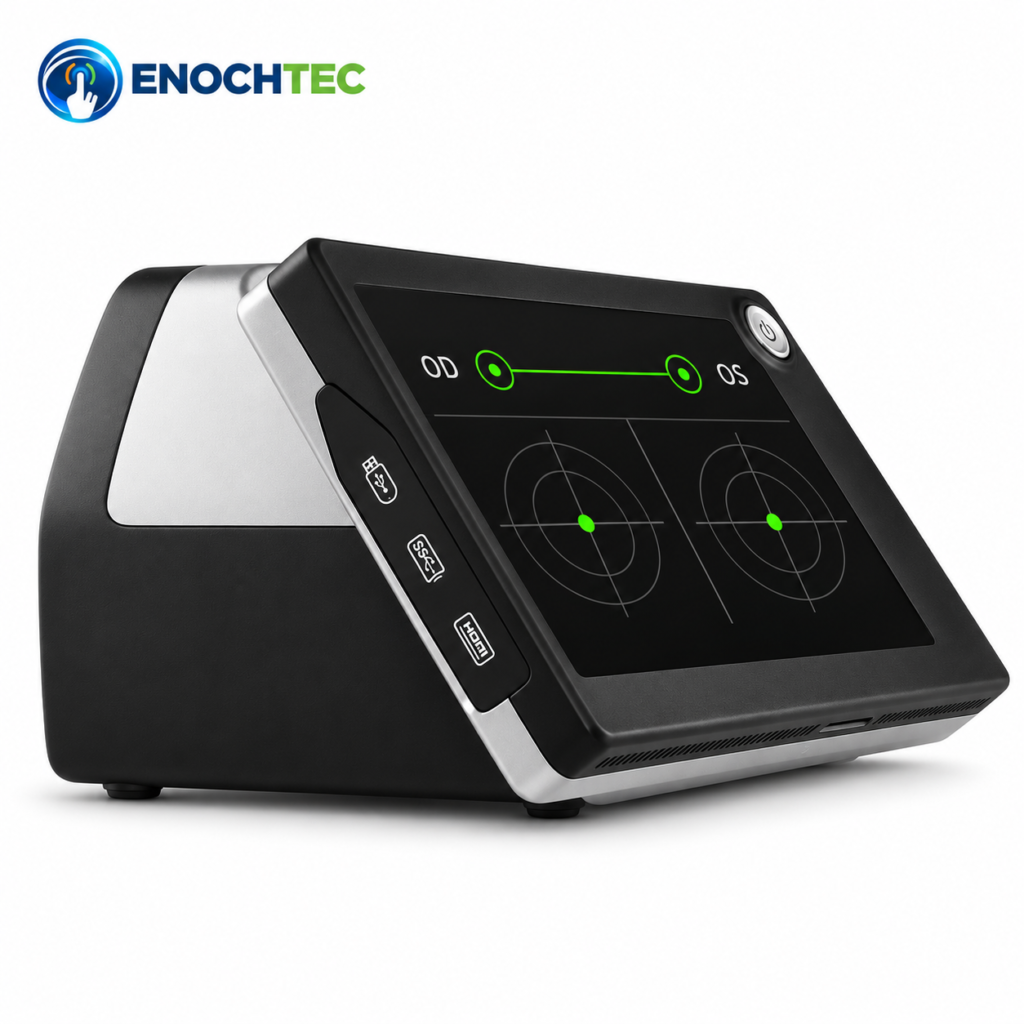
The 5.7-inch touchscreen shows both pupils and the results. The device weighs less than 500 g, measures 210 × 140 × 140 mm and runs on a replaceable 3.7 V rechargeable lithium battery; the power adapter accepts 100–240 V, 50/60 Hz. Measurements cannot be taken while the device is charging.
CVS X Overview Video
CVS X or C10?
Both are one-metre binocular screeners. The CVS X calculates results on the device in under one second, adds pupil size and gaze deviation, and is specified from six months of age. The C10 AI vision screener processes images on a cloud server over Wi-Fi, shows a Pass or Refer result and reports sphere, cylinder, axis and pupillary distance. Choose the CVS X when screening must work without a network connection or when eye alignment is part of the programme. For a wider comparison with tabletop autorefractors, see Photoscreener vs Autorefractor.
Applications
The CVS X supports paediatric and general vision screening where refractive values, pupil measurements and gaze deviation are needed from about one metre. Typical users include ophthalmologists, optometrists, paediatric practices, school and public-health screening programmes, and distributors of ophthalmic equipment. Operator requirements and referral criteria should be defined for the intended market and setting.
Frequently Asked Questions
Is the CVS X a diagnostic device?
No. The CVS X is a photoscreener that provides preliminary refractive and eye-alignment values for referral decisions. It does not replace a complete refraction, diagnosis or comprehensive eye examination.
From what age can it be used?
The CVS X is specified for children from six months of age and for adults.
How long does a screening take?
A measurement takes less than one second at a working distance of 1000–1060 mm under suitable lighting.
Can it detect strabismus?
The CVS X measures gaze deviation from 0° to 25° and shows eye-position changes that may indicate strabismus. A suspected strabismus must be confirmed with a cover test or an orthoptic examination.
Does the CVS X need an internet connection?
No. Results are calculated on the device. Wi-Fi is used for remote data access and Bluetooth for connected accessories.
What lighting does it need?
Normal indoor lighting or a darkened room. Avoid strong light and other infrared sources in the test area.
Can it be used while charging?
No. Measurements cannot be taken while the device is charging; a full charge takes less than three hours.