Complete Ophthalmic & Optometry Solutions

Tel / WhatsApp  +86 186 1198 1496

Fundus Imaging

Fundus cameras capture retinal images for screening, documentation and clinical review. Compare ENOCHTEC fundus imaging systems by field of view, capture workflow, portability and image-management options.

Buying guide

Fundus cameras: how to choose the right system

A fundus camera photographs the retina, optic disc and macula so the images can be reviewed, stored and compared over time. Non-mydriatic cameras are designed to capture images without dilating drops in suitable patients, which makes them practical for screening programs, optical practices and busy clinics.

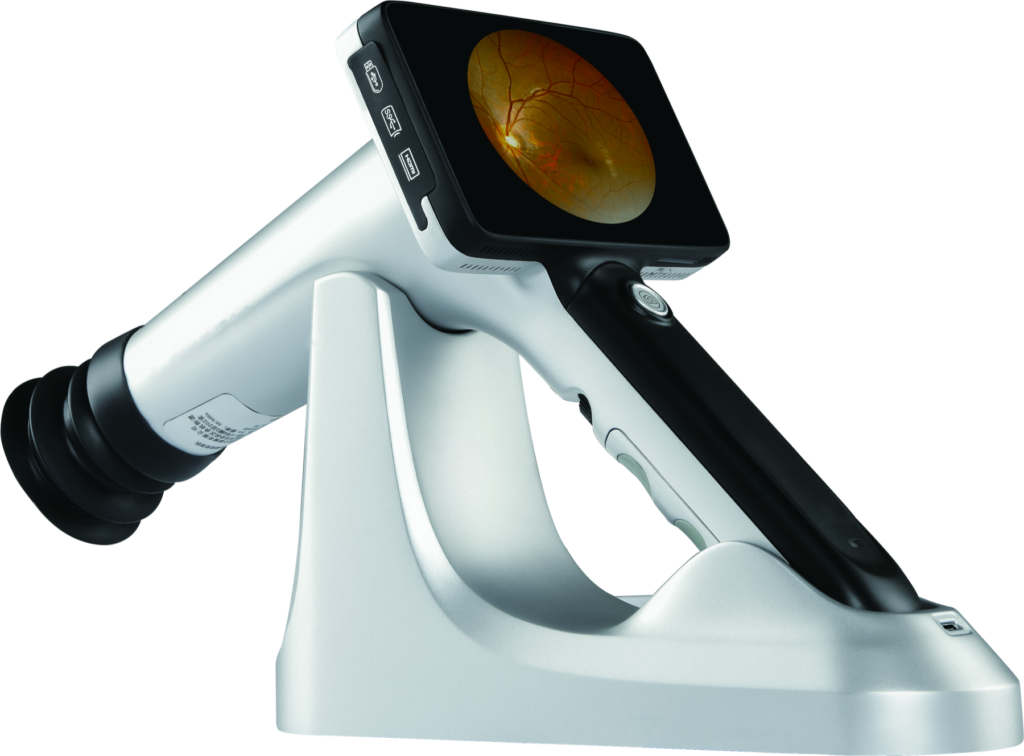
ENOCHTEC offers desktop, portable and handheld fundus cameras. The main differences are image resolution, the minimum pupil size each camera can work with, how much of the capture is automated and whether the camera needs to travel.

Compare ENOCHTEC fundus cameras

Swipe sideways to compare all models →

Kestrel 3100m RetiCam 3100 Kestrel 300 CFC-X
Format Desktop, automatic Desktop with integrated computer Portable, 3.6 kg with carrying case Handheld, under 600 g
Field of view 50°; up to 135° mosaic 50°; up to 135° mosaic 50° per image 50° per image
Image resolution 5 MP (SLR camera) 24 MP (SLR camera) 20 MP CMOS 18 MP sensor
Minimum pupil ≥2.8 mm ≥3.3 mm ≥3.0 mm 2.5 mm
Capture workflow One-key capture of both eyes Auto / manual; standard, FFA and FAF versions Voice-guided capture of both eyes Automatic and manual focus; 4.7-inch touchscreen
Data DICOM 3.0, LAN, USB, FTP DICOM 3.0, PACS, LAN, USB, FTP DICOM 3.0; customizable AI port USB, Wi-Fi, Bluetooth, SD card

Specifications are taken from each product page. Final configuration, accessories and electrical data are confirmed in the quotation for your destination market.

Questions to answer before you choose

  1. Where will images be taken? A fixed exam room suits a desktop camera; outreach, bedside and multi-site screening favour a portable or handheld unit.
  2. Which patients will you image? Small pupils and children benefit from a lower minimum-pupil specification and faster, automated capture.
  3. Do you need angiography? Fluorescein (FFA) and autofluorescence (FAF) imaging are available on specific RetiCam 3100 versions.
  4. How will images be stored and shared? Check DICOM, PACS and network requirements with your IT team before ordering.

Related diagnostic equipment

OCT & retinal imagingCross-sectional retinal scans
Portable diagnosticsHandheld screening devices
Slit lamp examinationAnterior-segment exam
Visual field analysisAutomatic perimeters

Planning a full examination room? See the ophthalmology clinic equipment guide.

Fundus camera FAQ

What does non-mydriatic mean?

The camera is designed to photograph the retina without pharmacological pupil dilation in suitable patients. A mydriatic mode is still available on the desktop models for cases that need it.

What is the difference between field of view and a mosaic?

Field of view is the area captured in one image (50° on these cameras). A mosaic stitches several 50° images taken at different fixation points into a wider view of up to 135°.

Which camera is suited to screening outside the clinic?

The Kestrel 300 (3.6 kg with carrying case) and the handheld CFC-X are designed for portable use. The desktop Kestrel 3100m and RetiCam 3100 suit fixed exam rooms.

Can the cameras connect to our image-management system?

The desktop models and the Kestrel 300 support DICOM 3.0. Network, PACS and software scope are confirmed for your installation with the quotation.

Not sure which fundus camera fits your workflow?

Tell us where you will image, your patient mix and how images are stored. We will recommend a configuration and send a quotation.

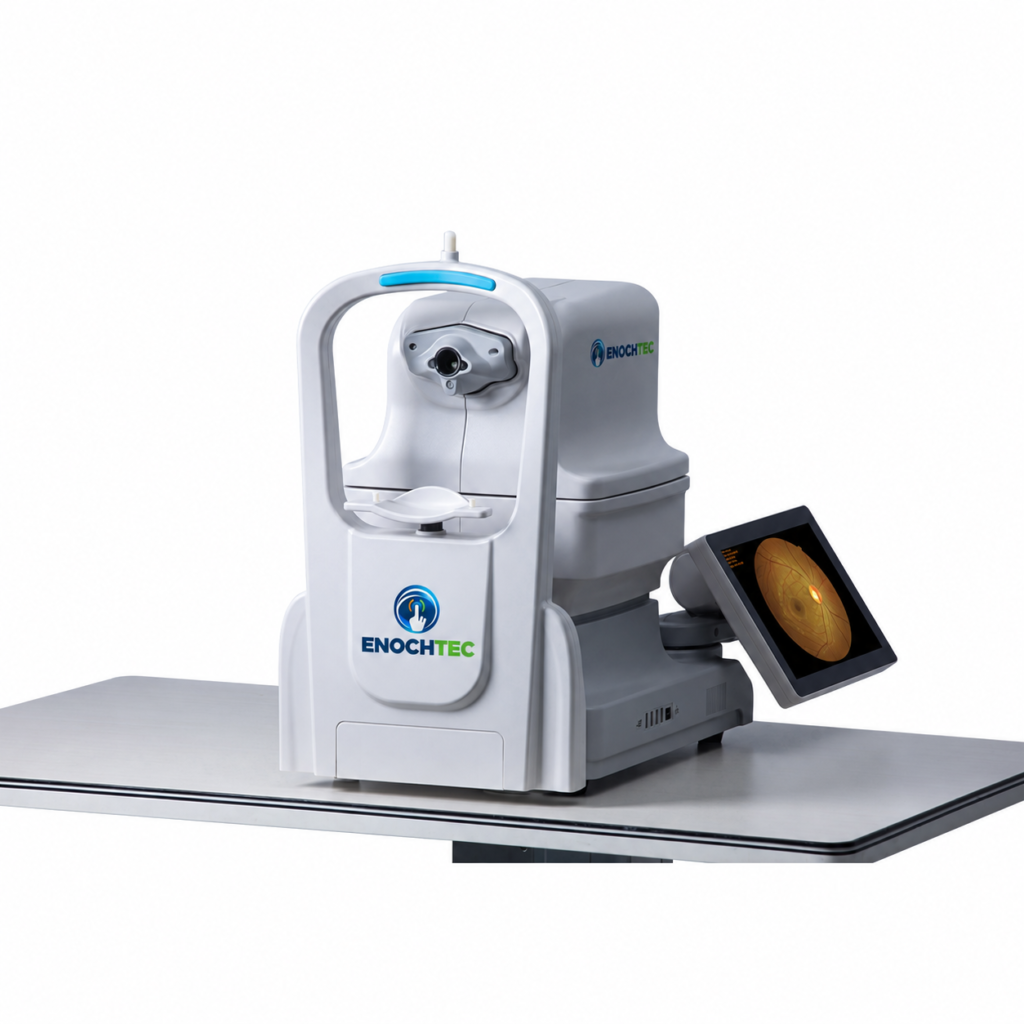
ENOCHTEC Kestrel 3100m non-mydriatic automatic fundus camera, front three-quarter view

Kestrel 3100m Non-Mydriatic Automatic Fundus Camera

Kestrel 3100m non-mydriatic automatic fundus camera with one-key capture of both eyes, 50° images, 135° nine-position mosaic, ≥2.8 mm small-pupil mode and an all-in-one design with rotatable monitor.
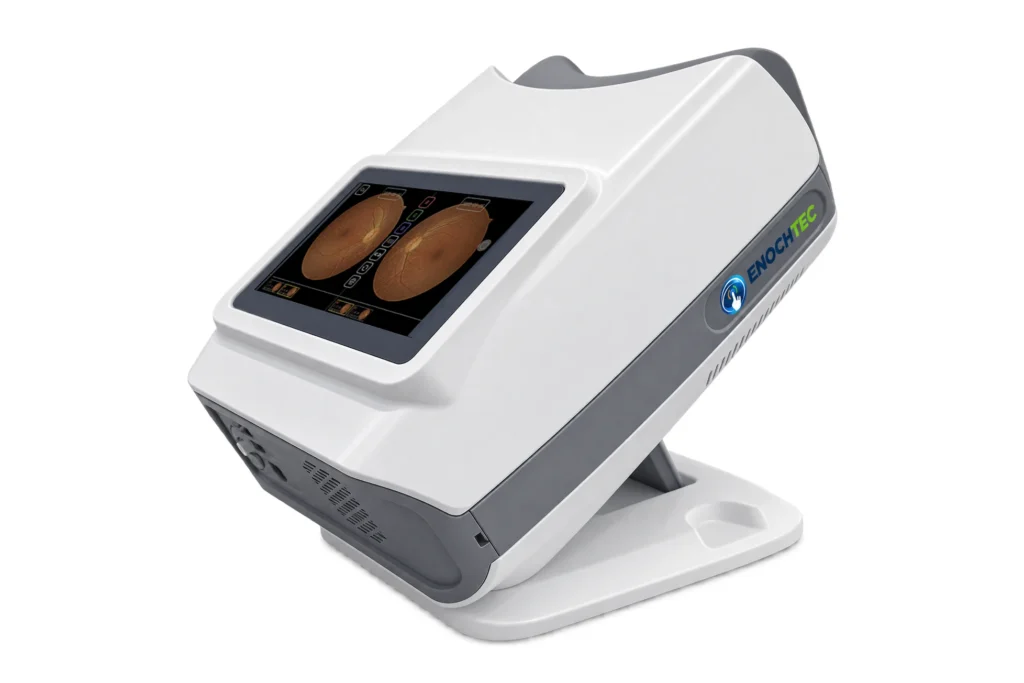
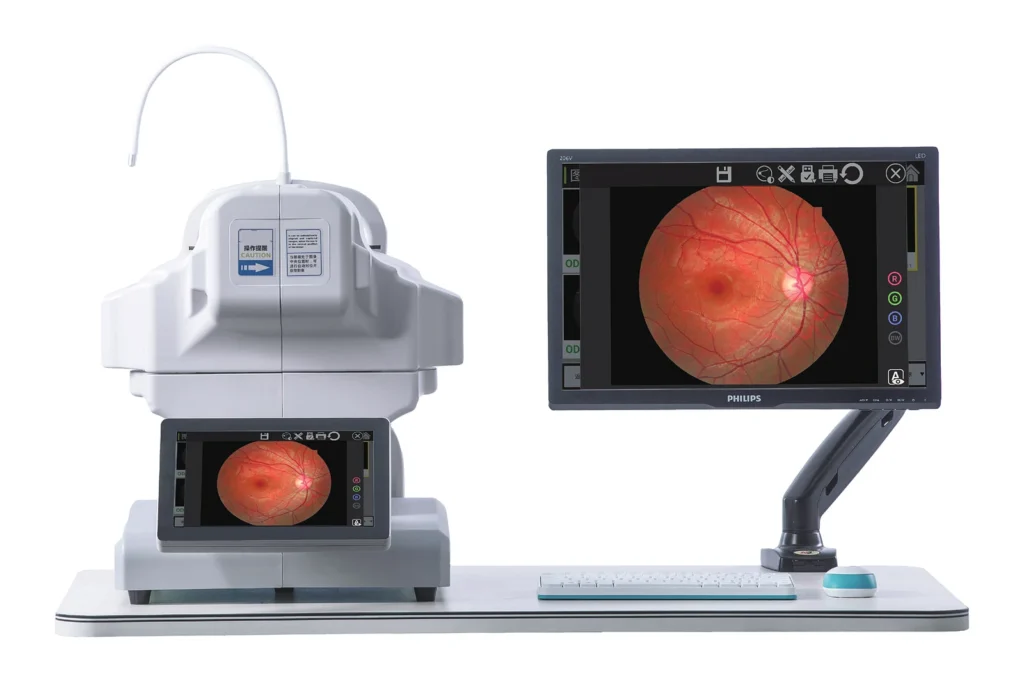
ENOCHTEC RetiCam 3100 non-mydriatic fundus camera with touchscreen and external monitor

RetiCam 3100 Non-Mydriatic Fundus Camera

RetiCam 3100 non-mydriatic fundus camera with 24 MP imaging, 50° single-image field, automatic and manual controls, DICOM 3.0 support and an up-to-135° nine-image mosaic.