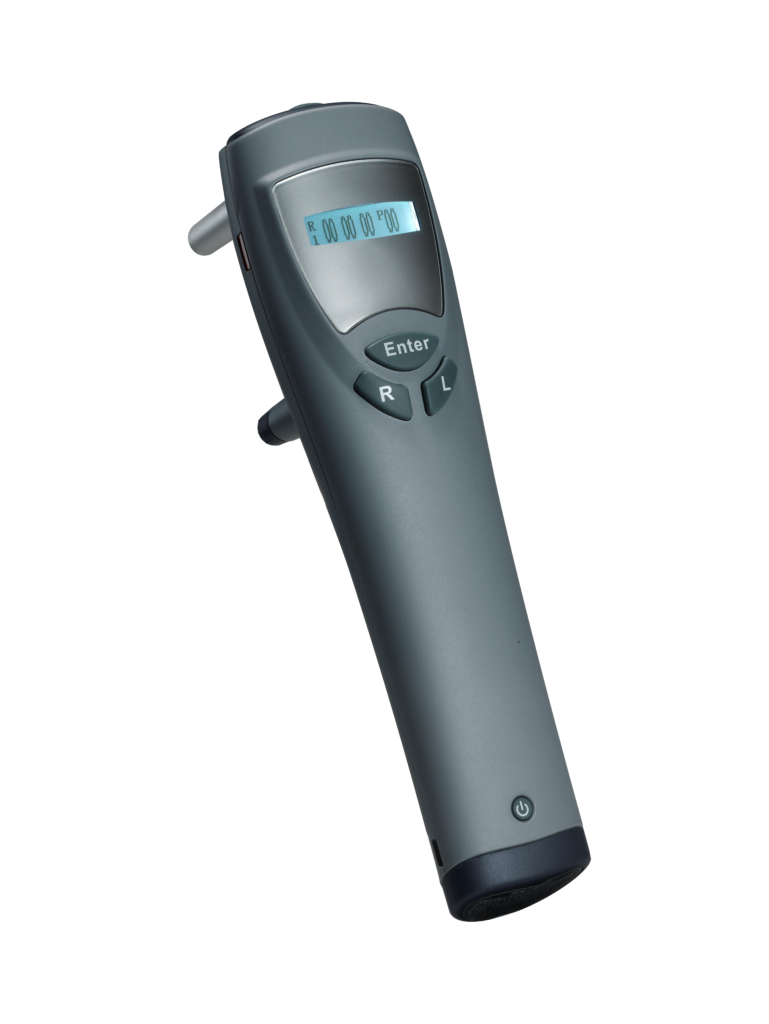
RT-500 Rebound Tonometer
RT-500 handheld rebound tonometer with a 3-70 mmHg range, vertical and horizontal measurement, disposable probes and wireless infrared thermal-printer output.

Tonometers measure intraocular pressure using rebound, non-contact or applanation methods, depending on the device. Compare ENOCHTEC tonometers by measurement method, portability, patient workflow and intended setting.
Buying guide
Measuring intraocular pressure (IOP) is a routine part of eye examinations and glaucoma care. The method affects comfort, speed and where the measurement can be taken.
ENOCHTEC offers a handheld rebound tonometer for flexible use and a fully automatic non-contact tonometer for exam rooms with high patient flow.
Swipe sideways to compare both models →
| RT-500 | ST-1000P | |
|---|---|---|
| Method | Rebound tonometry, disposable probes | Non-contact, dual-light and air-pressure sensing |
| IOP range | 3–70 mmHg | 1–30 / 1–60 mmHg |
| Operation | Handheld; vertical and horizontal measurement | One-key automatic measurement of both eyes; manual mode |
| Special functions | Wireless infrared printer output | Corneal thickness compensation; motorized chinrest |
| Display | — | 10.1-inch tiltable touch display |
| Weight | 0.2 kg | 19.7 kg |
Specifications are taken from each product page. Final configuration, accessories and electrical data are confirmed in the quotation for your destination market.
A rebound tonometer bounces a light disposable probe off the cornea and reads the rebound; a non-contact tonometer uses an air pulse and optical sensing without touching the eye.
A handheld rebound tonometer such as the RT-500 can measure in different positions and does not need a chinrest, which helps with children and patients with limited mobility.
It adjusts the IOP reading for central corneal thickness, which can influence measured pressure. It is available on the ST-1000P.
Tell us your setting and daily patient volume. We will recommend a tonometer and send a quotation.
RT-500 handheld rebound tonometer with a 3-70 mmHg range, vertical and horizontal measurement, disposable probes and wireless infrared thermal-printer output.
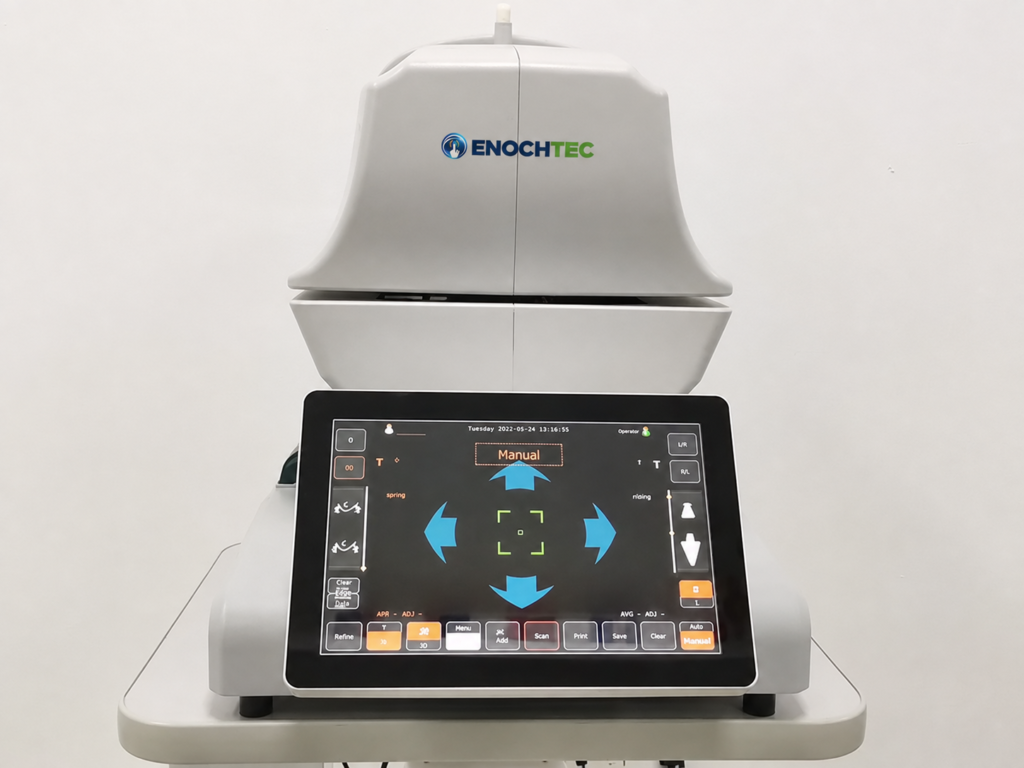
ST-1000P automatic non-contact tonometer with dual-light air-pressure sensing, selectable IOP ranges, corneal thickness compensation, a 10.1-inch tiltable touch display and motorized chinrest.